What they are
Seborrhoeic keratoses are benign growths formed by a build-up of ordinary skin cells. They are very common. They usually start to appear after the age of 30–40, and almost everyone over 60 has at least one. Some people have only a few, others dozens. The exact cause is not known, but a tendency to develop them sometimes runs in families.
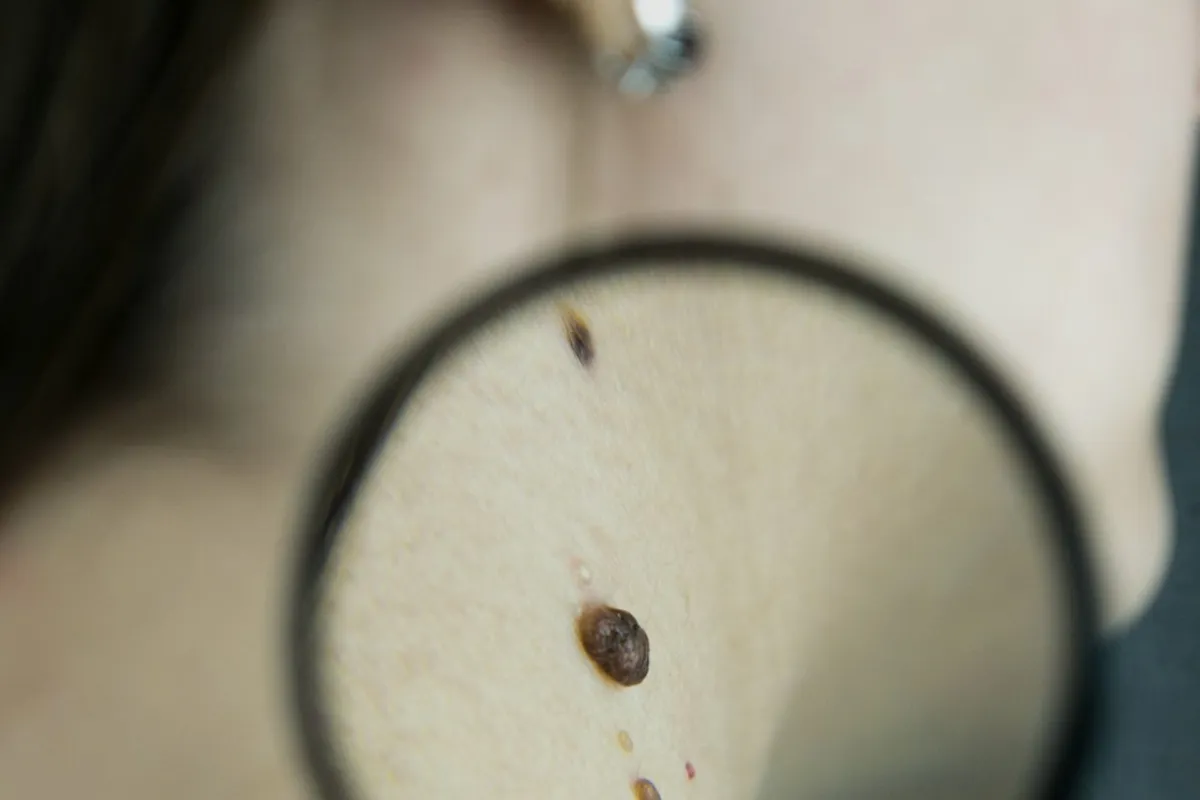
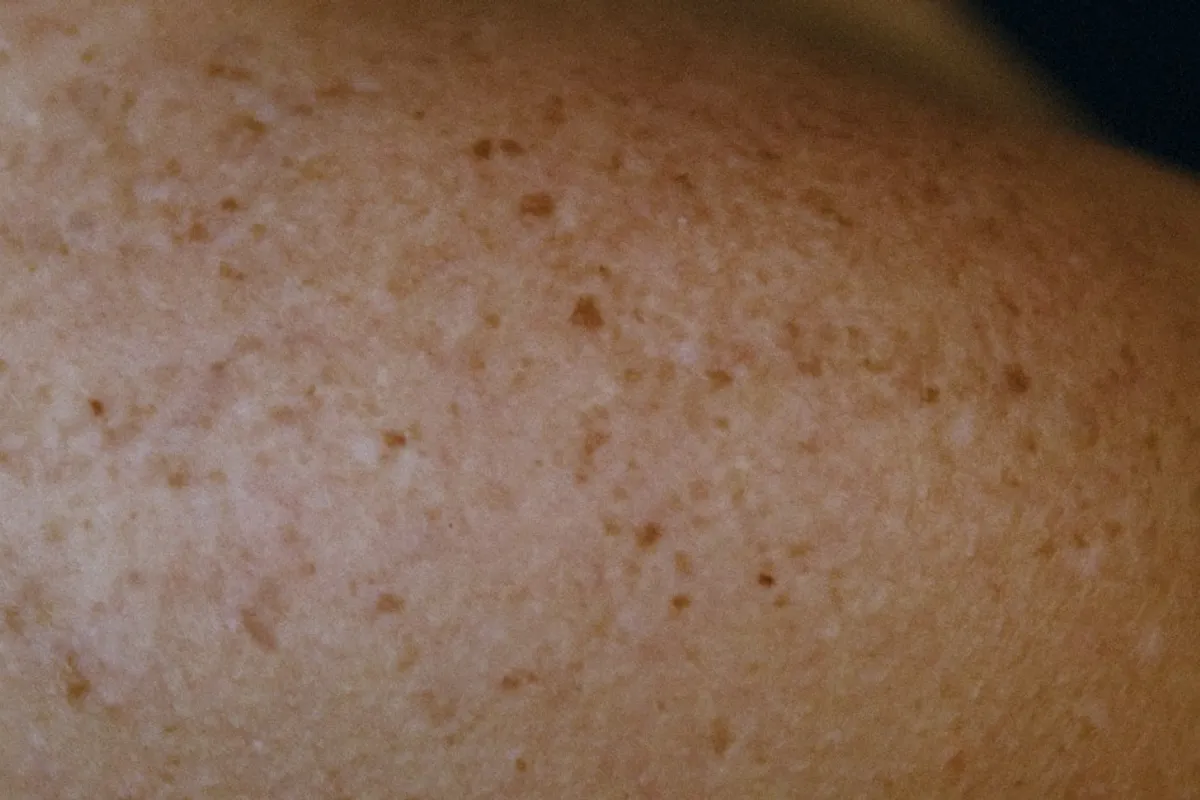
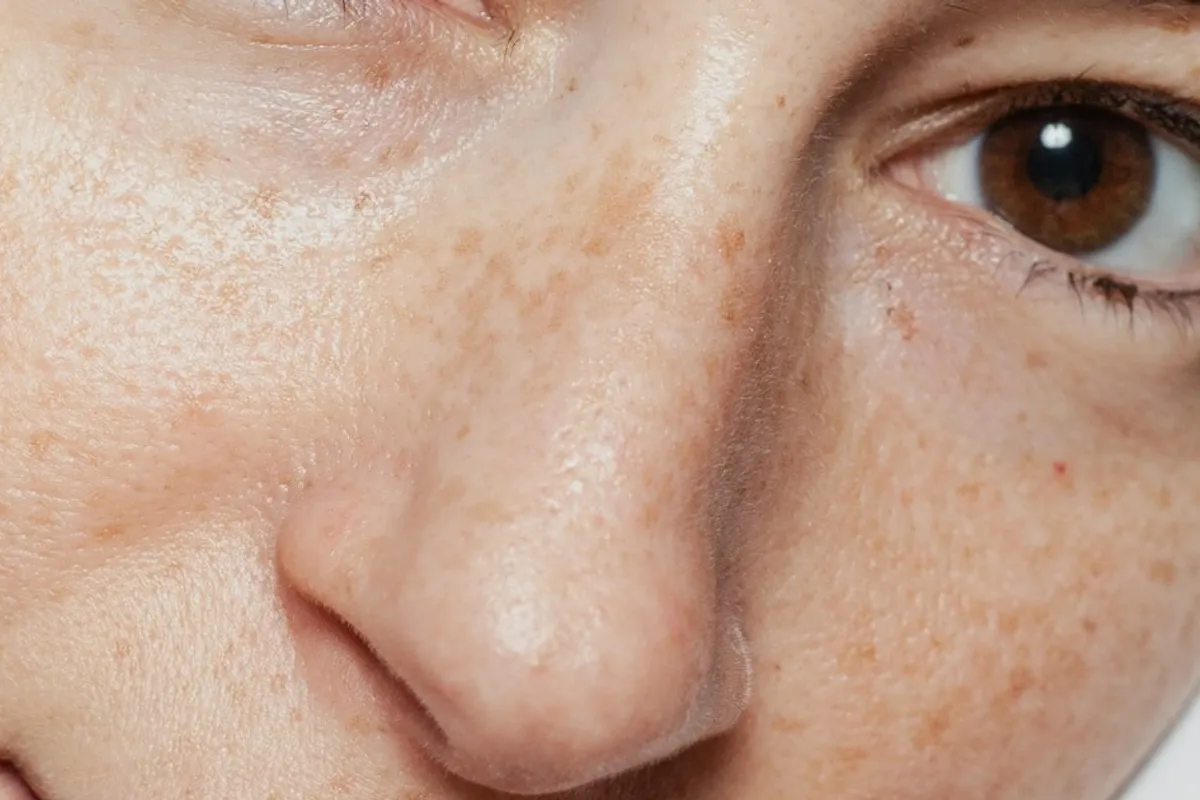
They look as if they have been stuck onto the skin. Their surface is rough, warty or waxy. They are most often brown or black, but they can also be skin-coloured, yellowish, grey or almost white. They range in size from about a millimetre to several centimetres. They appear most often on the back, chest, head and neck, but not on the palms or soles. They occur in every skin colour; on darker skin they sometimes look like many small dark bumps on the face and neck.
Are they dangerous?
Seborrhoeic keratoses are harmless. They are not contagious and they do not turn into skin cancer. Despite their name, they have nothing to do with the oil glands, and unlike common warts they are not caused by a virus.
They are usually painless. Sometimes they itch, turn red and become inflamed, especially if they catch on clothing or jewellery or get irritated by shaving. Once they appear, they usually stay, and new ones often appear over the years.
Why a doctor should still look at them
Seborrhoeic keratoses are far more common than skin cancer, but the two can look alike. A very dark seborrhoeic keratosis can resemble a melanoma, and other skin tumours can sometimes be hard to tell apart from it too. That is why a new or changing dark growth should be checked rather than assumed to be harmless out of habit.
A dermatologist can usually recognise a seborrhoeic keratosis by looking at it. Dermoscopy helps because it shows typical features that cannot be seen with the naked eye, but it does not always settle the question. In that case the growth is removed in full or in part and examined under a microscope, which is the only way to confirm or rule out cancer. You can read more about examination with a dermatoscope in the article on moles and dermoscopy.
Book an appointment if a growth grows quickly, darkens, bleeds or itches; if it looks different from the others; if it is dry, flat, rough or scaly; or if many new growths suddenly appear at once. The last of these can rarely be linked to a disease of the internal organs and needs a doctor's assessment.
When and how they are removed
Because they are harmless, seborrhoeic keratoses as a rule do not need treatment. They are removed when they itch, get irritated easily or catch on things, when they bother you cosmetically, or when another condition needs to be ruled out. The method is chosen after an examination.
In cryotherapy the growth is frozen with liquid nitrogen; this method suits thinner keratoses best and can be repeated if needed. A blister may form under the treated spot, which then dries into a crust and falls off on its own. In curettage the growth is scraped away under local anaesthetic with a small spoon-shaped instrument, sometimes combined with electrocautery; no stitches are needed. Laser treatment and removal with a blade are also used.
After treatment the treated skin may stay lighter than the skin around it. This usually fades over time but is sometimes permanent; on darker skin, loss of pigment is a bigger concern. Most removed keratoses do not come back, although they sometimes regrow in the same place. Treatment does not stop new keratoses from appearing elsewhere.
What not to do at home
Do not try to remove a seborrhoeic keratosis yourself: do not pick, cut or scrape it off. This carries a risk of infection. Besides, only a doctor can judge whether the growth really is a seborrhoeic keratosis.
A moisturiser may help with itching. If the itch persists, or the keratosis turns red, becomes inflamed or bleeds, book an examination.
How to book an appointment
If a skin growth worries you, or you have a seborrhoeic keratosis you would like removed, call the Dermatologicum reception and ask for an appointment with Dr. Kraevska. The reception keeps her weekly schedule and books the appointments. At the visit, say when you first noticed the growth and whether it has changed.
Sources and further reading
Consultations in Sofia
Dr. Kraevska sees patients at the Dermatologicum clinic in Strelbishte, Sofia, Monday–Friday 14:00–18:00, in English, French, Spanish and Bulgarian.